- Sign up for an eco-trip to see red pandas in the wild
- Adopt a red panda
- Become a member of the Red Panda Network
- Join Save the Red Panda cause on Facebook
- Help spread the word about red pandas
Friday, November 27, 2009
Red Panda Facts and How You Can Save Them
Thursday, November 19, 2009
Fun Manatee Facts and How You Can Save Them
Manatees are also sometimes called sea cows but despite their slow movements they have a lot going on - their intelligence, learning ability and long term memory is similar to that of dolphins!
Did you know that manatees have bones in their flippers that are similar to the human hand? These bones enable the manatee to move through the water, bring food to their mouth and hold objects. They even have "finger" nails on each flipper.
Look closely at the photo. Notice anything missing? Manatees don't have eye lashes!
Why Manatees Need Our Help
Manatees are listed as vulnerable by the IUCN and endangered by the Endangered Species Act. The leading cause of death for these gentle giants is boats - either by propeller or hull, both of which result in serious if not fatal wounds. Most manatees have scars on their back which scientists use to identify individuals. Global warming, which leads to toxic algae blooms and loss of coastal and fresh water habitat and degradation of their habitat are also threats to the manatee. Sources: Manatee Fun Facts, Florida Manatee
Help Save Manatees
- Tell your senator to act against global warning (U.S. citizens)
- Volunteer with Save the Manatee Club
- Send an online letter to protect Florida's beaches (one area where manatees live)
- Sign a petition for Greater Enforcement Of Boat Speed Zones (in Florida)
- Get cool manatee stuff (some of it's free)
- Join Save the Mantee Club on Facebook
Manatee photo courtesty of: windy234
Tuesday, November 17, 2009
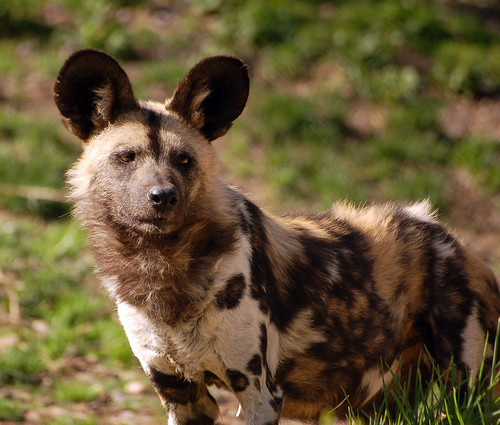
African Wild Dog Facts and How You Can Save Them
African wild dogs are also very successful predators with ~80% of their hunts resulting in a kill, a much higher success rate than other carnivores. Perhaps in part African wild dogs are such successful hunters because they have the highest bite force quotient (strength of the bite relative to their body mass) of all carnivores. Pretty impressive!
Why African Wild Dogs Need Our Help
African wild dogs are one of the world's most endangered canids with only ~3000 - 5500 individuals remaining in eastern and southern Africa. They've been persecuted by humans for years, negatively impacted by human overpopulation which has led to habitat loss. They've also been hunted for game and by livestock owners. African wild dogs also live in unprotected areas since most of the national parks are too small to support their packs. Sources: Wikipedia: African Wild Dog, African Wild Dog Conservancy.
Help Save African Wild Dogs
- Subscribe to the free African Wild Dog Conservancy e-newsletter
- Make a donation to the African Wild Dog Conservancy
- Volunteer with African Wild Dog Conservation (competitive process for students and scientists)
- Adopt an African wild dog through the African Wild Dog Conservation
- Buy a print of an African wild dog
- Add African Wildlife Foundation as a Friend on MySpace
- Make a donation to the Namibia Nature Foundation
- Volunteer with African Wild Dogs through the Harnas Wildlife Foundation
- Join Help African Wild Dogs cause on Facebook
Monday, November 16, 2009
Greater Horseshoe Bat Facts and How You Can Save Them
Greater horseshoe bats are one of the largest bats in the U.K., but are still only the size of a small pear.
Listen to a greater horseshoe bat. It's a very cool sound.Did you know that all bat species and their roosts are protected in the U.K. under the Wildlife and Countryside Act 1981? That's great news for bats!
Source: Bat Conservation Trust: Greater Horseshoe Bat
Why Greater Horseshoe Bats Need Our Help
Greater horseshoe bats like many bats in the U.K., are endangered and the greater horseshoe bat is one of the most endangered mammals in the world. They can now only be found in SW England and S. Whales. Their population numbers have decreased by approximately 90% in the past 100 years. Greater horseshoe bats are threatened in large part because of roost disturbance, agriculture, and the use of pesticides, which has reduced the numbers of one of their favourite foods - beetles.
Help Save Greater Horseshoe Bats
- Volunteer for Bats in the U.K., help monitor bats, assist on the bat helpline, etc.
- Join the Bat Conservation Trust in the U.K.
- Join your local bat group, there are 10 local bat groups in the U.K.
- Volunteer with the Purbeck Bat Project
- Join in on the Bat Discussion Forum
- Visit Woodchester Mansion and the surrounding parkland for a possible glimpse of the greater horseshoe bat
More info: How the bat flap will save endangered species
Greater Horseshoe Bat photo courtesy of: Bat Ecology and Bioacoustics Laboratory, Dept of Biosciences, University of Bristol.Friday, November 13, 2009
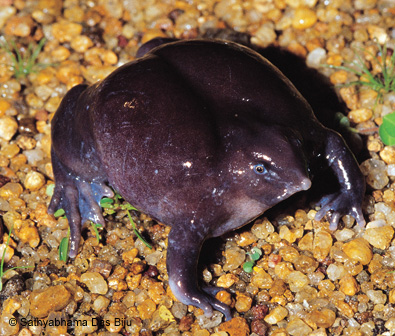
Purple Frog Facts and How You Can Save Them
The purple frog is the first new family of frogs to be discovered since 1926 and has independently been evolving for 130 million years. Can you imagine having cousins that were 130 million years old? The purple frog is thought to have lived with dinosaurs 175 millions years ago. Hmmm, I wonder how dinosaurs and purple frogs got along? Maybe that's why they spend so much time in the ground - hiding from dinosaurs?
Purple frogs are only found in Western Ghats India and their population numbers aren't known. Check out the purple frog's first ever public appearance on video. Source/More info: EDGE: Purple Frog, Purple Frog Pops Up
Why the Purple Frog Needs Our Help
Purple frogs are endangered primarily because of habitat disturbance from humans in the form of habitat loss due to coffee, cardamom and ginger plantations. It's difficult to imagine that we are damaging to the point of endangering such a reclusive species.
Help Save the Purple Frog
- Support the EDGE Amphibian Project, which includes the purple frog
- Become an EDGE Champion and participate in or organize your own fundraising event for the purple frog - cake sale, run, read-a-thon, you name it!
- Become a fan of People's Trust for Endangered Animals on Facebook, an organization that supports the conservation of the purple frog
Thursday, November 12, 2009
Riverine Rabbit Facts and How You Can Save Them
Riverine rabbits are endemic to South Africa and are Africa's only digging rabbit. Females dig boroughs for their newborns, which is nice of them since like all rabbits, newborns are born blind and hairless, completely dependent on their mother.
Riverine rabbits are slower than other rabbits in South Africa so rely on camouflage for protection. You're not likely to see a riverine rabbit unless you are a night owl as they are nocturnal.
Riverine rabbits are not adventurous eaters, with 90% of their diet comprising of Karoo shrubs. This specialized diet means they have limited suitable habitat, none of which is protected -see below.
Why Riverine Rabbits Need Our Help
Riverine rabbits are critically endangered with less than 250 individuals left. They are South Africa's most critically endangered animal and the 13th most endangered animal in the world. None of their habitat is protected and most of it is on farmland. Riverbank degradation, riverine habitat destruction, overgrazing which leads to soil erosion, habitat fragmentation which prevents populations from mingling and therefore breeding and illegal hunting have all lead to the riverine rabbit's critically endangered status. Sources: Endangered Wildlife Trust Riverine Rabbit, Riverine Rabbit Working Group
Help Save Riverine Rabbits
- Become a member of the Endangered Wildlife Trust which has established the Riverine Rabbit Working Group
- Volunteer with Riverine Rabbits, contact Dr. Vicky Ahlmann of the Endangered Wildlife Trust: Riverine Rabbit Work Group at vickya@ewt.org.za
- Donate an item from the wish list of the Endangered Wildlife Trust
- Shop at the Endangered Wildlife Trust
- Purchase a cuddly Riverine Rabbit at Greater Good South Africa
- Join the Save the Riverine Rabbit group on Facebook
Photo courtesy of: Ravine Rabbit Conservation Project
Tuesday, November 10, 2009
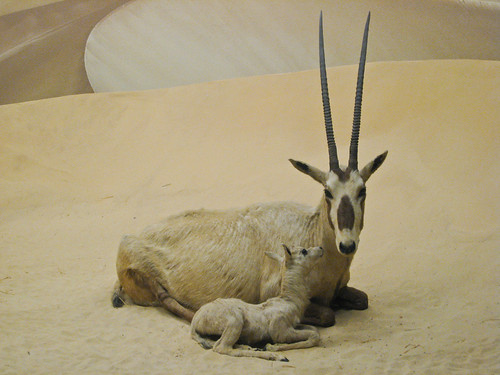
Fun Arabian Oryx Facts and How You Can Save Them
Surprisingly, or perhaps not, given the hot climate they live in, Arabian Oryx will not win any speed competitions, as they are poor runners, however they have excellent endurance when it comes to walking and have been know to walk over 70 km in one night!
If you are ever fortunate enough to see an Arabian Oryx in person, look closely, at 100m they are almost invisible to the human eye since their hair lacks glare and reflection. Source: The Arabian Oryx Project
Why the Arabian Oryx Needs Our Help The Arabian Oryx' is one of the rarest animals in the world with less than 900 individuals in total. It is a highly endangered species found in Bahrain, Israel, Oman and Saudi Arabia. All of the Arabian Oryx have been reintroduced in each of these countries, as they were previously extinct in the wild and only existed in captivity. In the past, the main threat to the Arabian Oryx was being over hunted for both meat and hides, as well as being hunted for recreation by motorized groups. Illegal poaching of re-introduced oryx's is a constant threat today.
The Oman population faces special problems. Arabian Oryx's are caught illegally for sale to private collections, which is the main threat in Oman. As soon as the animals wander outside the protected areas where they have been released, their safety cannot be guaranteed.
Further compounding the problem is the limited choice of future release sites due to drought and overgrazing. Source: Animal Info: Endangered Animals
How You Can Help Save the Arabian Oryx
- Visit the Arabian Oryx Sanctuary in Oman which was also the region's first UNESCO World Natural Heritage Site and the first one to be deleted Source: UNESCO
- Sign up to receive updates from the World Wildlife Fund
- Unfortunately I couldn't find a lot of information on further actions you could take to directly save the Arabian Oryx. If anyone has any, I would love to hear from you to expand this list.
Arabian Oryx photo courtesy of: clairity
Sunday, November 1, 2009
Tasmanian Devil Facts and How You Can Save Them
First of all, did you know that the Tasmanian devil is the world's largest surviving carnivorous marsupial. Quite the mouthful! The Tasmanian devil is also known for a less dubious honour. It has terrible body odour when agitated. Some say it rivals the skunk. Note to self, if you see a Tasmanian devil do not irritate it.
Also interesting are the vocalizations of the Tasmanian devil which is often described as a screech. Listen to a Tasmanian devil. I can't say I've ever heard a sound like that before.
Why Tasmanian Devils Need Our Help
Help Save Tasmanian Devils
- Join the Devil Facial Tumor Disease Team's Volunteer Program
- Visit the Tasmanian Devil Conservation Park and see Tasmanian devils
- Become a Friend of the Devil (different levels of membership and benefits available)
- Donate to the Save the Tasmanian Devil Appeal
- Join the Save the Tassies cause on Facebook
Photo of Tasmanian Devil courtesy of: themachobox
Saturday, October 31, 2009
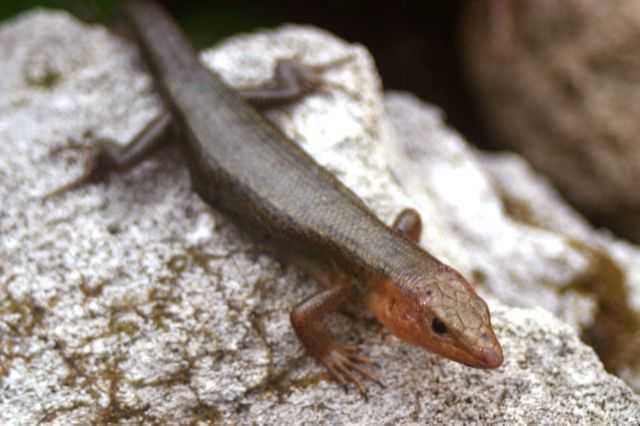
Bermuda Skink Facts and How You Can Save Them
- Support the Bermuda Audubon Society which works to protect local species and create nature reserves
- If you live in Bermuda volunteer at the Bermuda Aquarium, Museum and Zoo on a skink project
- If you live in Bermuda or are visiting Bermuda, at a minimum ensure that you do not litter but try and reduce your waste as much as possible
- Donate to the Bermuda Biodiversity Project