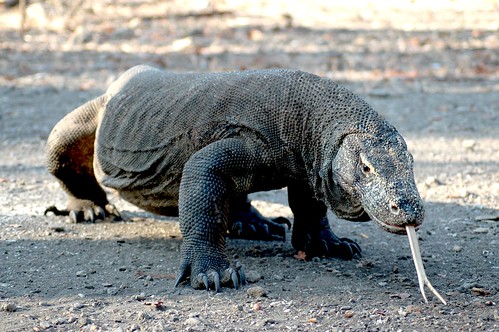
Komodo dragons are the largest lizards on earth, and can reach 2-3 meters in length! Their large size is due to island gigantism - a biological phenomenon where the size of animals isolated on an island without predators increases over time.
Young komodo dragons hang out in trees - to avoid being eaten by adult komodo dragons. Despite occasionally eating young komodo dragons, birds, bird eggs and the odd monkey or king cobra, komodo dragons primarily eat carrion - carcases of already dead animals.
Komodo dragons rarely attack humans, but will occasionally dig up fresh graves - they are carrion eaters after all! It's a good think komodo dragons aren't overly interested in us since their saliva is very high in e-coli bacteria and can cause severe infection, not to mention the damage their teeth can do. Sources/more info: Wikipedia: Komodo Dragons, The Fierce and Ugly Komodo Dragon Fights On
Why Komodo Dragons Need Our Help
Komodo dragons are listed as vulnerable and are protected under Indonesian law. Unfortunately they're still vulnerable to volcanic activity, earthquakes, poaching, loss of habitat and loss of prey. There are an estimated 4000 - 5000 komodo dragons left.
Help Save Komodo Dragons
- Visit Komodo Dragon National Park and appreciate the world's largest lizard for yourself
- Volunteer with the Komodo Survival Program in Indonesia
- Contact the Komodo Foundation and see how you can help
- Adopt Raja a komodo dragon at the Zoological Society of London, London Zoo
- Join Save the Komodo Dragon on Facebook
Komodo dragon photo courtesy of: whl.travel