Monday, November 30, 2009

Greyhound Dog Facts and How You Can Save Them


You may know that greyhound dogs are the fastest breed of dog reaching speeds up to 45 mph, but did you know that greyhound dogs are also considered couch potatoes? That's right, while greyhound dogs are known for their speed, they're not known for their endurance and are quite happy to get in a few runs a week and take it easy in between. Source: Greyhounds

Why Greyhound Dogs Need Our Help
Thousands of greyhound dogs are killed every year when they are no longer able to race. Even when they are racing many are not treated well spending most of their time in small kennels and muzzled.

Help Save Greyhound Dogs

Greyhound dog photo courtesy of: Kjunstorm

Friday, November 27, 2009

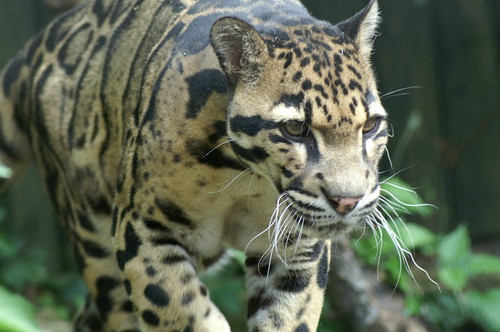
Clouded Leopard Facts and How You Can Save Them


Clouded leopards are among the best climbers of all cats - they can even hang upside down from branches! Clouded leopards spend a lot of their time in trees but it's thought that they do most of their hunting on the ground, although they may hunt for monkeys in the trees. They are very mysterious secretive cats that live in the tropical rainforests of Asia - so much so that we know very little about their social behaviour. Listen to a clouded leopard.


Why Clouded Leopards Need Our Help

Clouded leopards are listed as an endangered species by the U.S. Fish and Wildlife Act and a vulnerable species by the IUCN. Clouded leopards are threatened by forest destruction and degradation primarily due to logging, agriculture, especially palm plantations. Clouded leopards are also hunted by commercial poachers and subsistence hunters. Although it is illegal to internationally trade clouded leopards, they are still illegally traded in a corrupt system and are popular as pets and in zoos. Sources: The Clouded Leopard Project


Help Save Clouded Leopards


Clouded leopard photo courtesy of: tim ellis


Red Panda Facts and How You Can Save Them

Red pandas definitely have the cute factor and upping their cute factor even more is that they use their long fluffy tails as wraparound blankets, since they're solitary and don't have a mate to cuddle up with - ahhhh.
Red pandas can be found in the forests of Nepal, northern Myanmar and China. They spend more than 85% of their time in trees and despite only being the size of a raccoon can eat up to 200,000 bamboo leaves in one day! Quite the appetite!

Why Red Pandas Need Our Help
Red pandas are endangered due to deforestation from logging and to make room for agriculture. Habitat fragmentation, poaching for the pet and fur trade have also lead to their endangered status. In China their fur is used to make hats and clothing. Sources: Animal Info: Red Panda, National Geographic: Red Panda

Help Save Red Pandas
Red panda photo courtesy of: Tambako the Jaquar

Wednesday, November 25, 2009

Fun Narwhal Whale Facts and How You Can Save Them

Narwhal whales are best known for their long unicorn like tusk, which is actually a tooth! If you see a narwhal whale with a long tooth you know it's a male, since female narwhals have a much smaller tooth. Scientists are not sure what function the long tooth serves but it may be used as a weapon, mating, to establish dominance or for channeling solar pulses. I don't think any of my teeth have those abilities!

Despite their long tooth, narwhal whales are preyed upon by polar bears, orcas and hunted for subsistence by Inuits. I'm guessing they must be pretty hungry to go after such a large whale with a gigantic tooth! If you have never been to the Arctic waters where narwhal whales live, you probably have never seen a narwhal whale since they don't do well in captivity. Listen to a Narwhal Whale. Source/more info: Defenders of Wildlife: Narwhal.

Why Narwhal Whales Need Our Help
Narwhal's have long been called the "ivory of the Arctic" and hunted for their long tooth. They are not currently at risk for extinction with estimates of 45,000 - 50,000 narwhals, but they could be if trade for their parts continues. The U.S. and Mexico ban imports of all marine mammal products but many other countries do not which could endanger the narwhal whale, along with many other marine mammals. Source: National Geographic: Hunting Narwhals

Help Save Narwhal Whales

Narwhal whale photo courtesy of: Whale Release and Stranding Newfoundland and Labrador

Tuesday, November 24, 2009

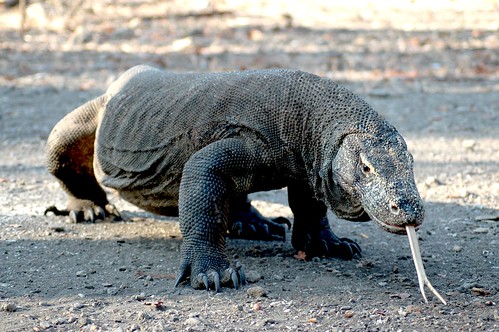
Fun Komodo Dragon Facts and How You Can Save Them


Komodo dragons are the largest lizards on earth, and can reach 2-3 meters in length! Their large size is due to island gigantism - a biological phenomenon where the size of animals isolated on an island without predators increases over time.


Young komodo dragons hang out in trees - to avoid being eaten by adult komodo dragons. Despite occasionally eating young komodo dragons, birds, bird eggs and the odd monkey or king cobra, komodo dragons primarily eat carrion - carcases of already dead animals.


Komodo dragons rarely attack humans, but will occasionally dig up fresh graves - they are carrion eaters after all! It's a good think komodo dragons aren't overly interested in us since their saliva is very high in e-coli bacteria and can cause severe infection, not to mention the damage their teeth can do. Sources/more info: Wikipedia: Komodo Dragons, The Fierce and Ugly Komodo Dragon Fights On


Why Komodo Dragons Need Our Help

Komodo dragons are listed as vulnerable and are protected under Indonesian law. Unfortunately they're still vulnerable to volcanic activity, earthquakes, poaching, loss of habitat and loss of prey. There are an estimated 4000 - 5000 komodo dragons left.


Help Save Komodo Dragons


Komodo dragon photo courtesy of: whl.travel

Monday, November 23, 2009

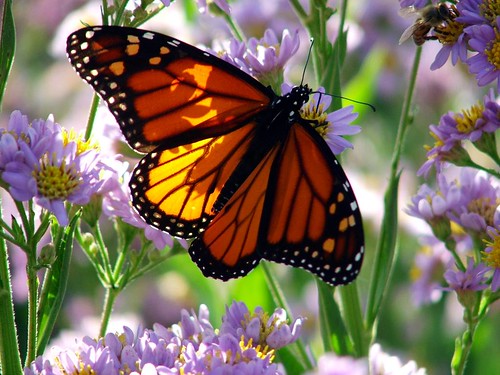
Fun Monarch Butterfly Facts and How You Can Save Them


The monarch butterfly's migration from Canada or the U.S. to Mexico is considered one of the most spectacular natural phenomenas in the world! Monarch butterflies fly 1200-1800 miles (1900 - 2900 km) round trip! Pretty impressive for such a small insect!

Most monarch butterflies only have a lifespan of 4-5 weeks, but every fall a special generation of migrating monarch butterflies is born and they live for 7 to 8 months! In human terms, that's equivalent to your children living to be 525 years old.

Why Monarch Butterflies Need Our Help
The monarch butterfly migration is recognized as an endangered biological phenomena. Habitat preservation, especially the wintering habitat in Mexico is key to the survival of the monarch butterfly and is considered the first priority in world butterfly conservation. Sources/more information: Monarch Butterflies: The Monarch of Migration

Help Save Monarch Butterflies

Monarch butterfly photo courtesy of: Creativity+TimothyK Hamilton's Photostream

Sunday, November 22, 2009

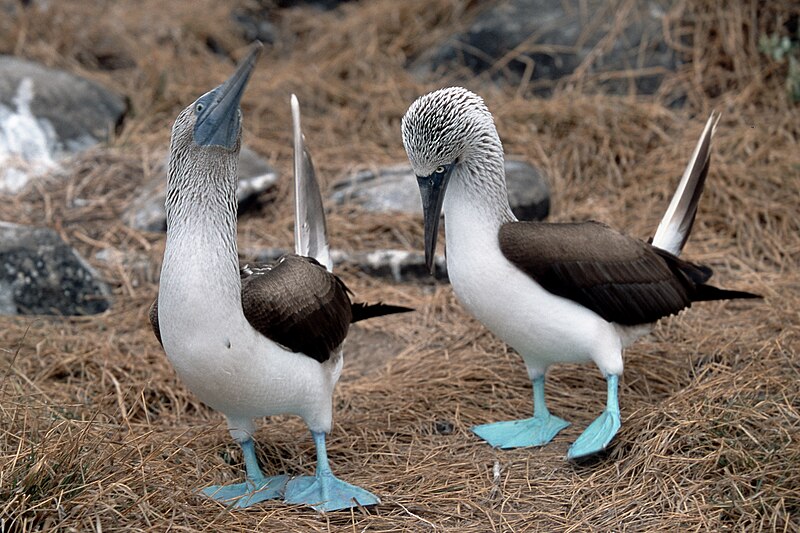
Blue Footed Boobies and How You Can Save Them


Blue footed boobies are memorable if not for their name (which comes from the Spanish word "bobo" meaning fool or clown, since blue footed boobies are clumsy on land) then for their blue feet which play a role in courtship - the bluer the better when it comes to attracting a mate!

Blue footed babies also exhibit some interesting parenting skills in the Galapagos. They nest on the ground and once the booby chick is hatched they leave it to fend for itself while they go off in search of food. Fortunately the blue footed booby has no predator so the booby chicks are safe - except for the flash of all the tourist's cameras, but the blue footed boobies don't seem to mind, some of them actually seem to appear to pose for the camera. Born stars!

Why Blue Footed Boobies Need Our Help

Fortunately blue footed boobies are considered a species of "least concern" by the IUCN. Their habitat is also protected and they have no predators so they are in better shape than many other species. However they do feed exclusively on fish so it is important to ensure the waters and marine life in the Galapagos are protected.

For more information on the Galapagos see: Travel to Galapagos, Galapagos at the Crossroads: Book Review, Fun Galapagos Giant Tortoise Facts and How We Can Save Them

Help Save Blue Footed Boobies

Blue footed booby photo courtesy of: Wikimedia Commons

Thursday, November 19, 2009

Fun Manatee Facts and How You Can Save Them


Would you believe that manatees closest relatives are elephants and hyraxes? That's right manatees are though to have evolved from 4-legged land animals over 60 million years ago.

Manatees are also sometimes called sea cows but despite their slow movements they have a lot going on - their intelligence, learning ability and long term memory is similar to that of dolphins!

Did you know that manatees have bones in their flippers that are similar to the human hand? These bones enable the manatee to move through the water, bring food to their mouth and hold objects. They even have "finger" nails on each flipper.

Look closely at the photo. Notice anything missing? Manatees don't have eye lashes!

Why Manatees Need Our Help
Manatees are listed as vulnerable by the IUCN and endangered by the Endangered Species Act. The leading cause of death for these gentle giants is boats - either by propeller or hull, both of which result in serious if not fatal wounds. Most manatees have scars on their back which scientists use to identify individuals. Global warming, which leads to toxic algae blooms and loss of coastal and fresh water habitat and degradation of their habitat are also threats to the manatee. Sources: Manatee Fun Facts, Florida Manatee

Help Save Manatees


Manatee photo courtesty of: windy234

Tuesday, November 17, 2009

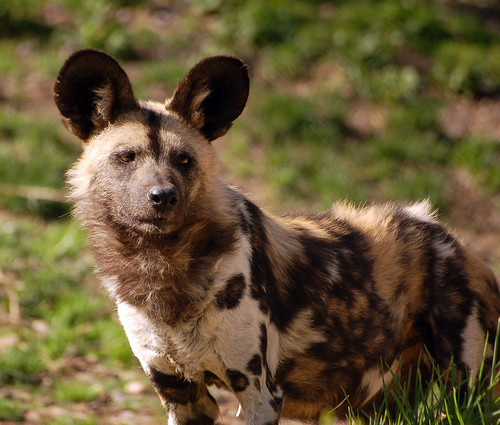
African Wild Dog Facts and How You Can Save Them

African wild dog packs are submission based hierachies, rather than dominance based, meaning that they will beg for food rather than fight for it. African wild dogs will even bring back food, well regurgitate it, for injured or old members of the pack who can't keep up with the hunt. Who knew African wild dogs had hearts of gold?

African wild dogs are also very successful predators with ~80% of their hunts resulting in a kill, a much higher success rate than other carnivores. Perhaps in part African wild dogs are such successful hunters because they have the highest bite force quotient (strength of the bite relative to their body mass) of all carnivores. Pretty impressive!

Why African Wild Dogs Need Our Help
African wild dogs are one of the world's most endangered canids with only ~3000 - 5500 individuals remaining in eastern and southern Africa. They've been persecuted by humans for years, negatively impacted by human overpopulation which has led to habitat loss. They've also been hunted for game and by livestock owners. African wild dogs also live in unprotected areas since most of the national parks are too small to support their packs. Sources: Wikipedia: African Wild Dog, African Wild Dog Conservancy.

Help Save African Wild Dogs
African wild dog photo courtesy of: digitalART2

Monday, November 16, 2009

Greater Horseshoe Bat Facts and How You Can Save Them


One of the coolest things about horseshoe bats is that they give birth upside down hanging by their feet! Can you imagine? They can also live up to 30 years.

Greater horseshoe bats are one of the largest bats in the U.K., but are still only the size of a small pear.

Listen to a greater horseshoe bat. It's a very cool sound.

Did you know that all bat species and their roosts are protected in the U.K. under the Wildlife and Countryside Act 1981? That's great news for bats!

Source: Bat Conservation Trust: Greater Horseshoe Bat

Why Greater Horseshoe Bats Need Our Help
Greater horseshoe bats like many bats in the U.K., are endangered and the greater horseshoe bat is one of the most endangered mammals in the world. They can now only be found in SW England and S. Whales. Their population numbers have decreased by approximately 90% in the past 100 years. Greater horseshoe bats are threatened in large part because of roost disturbance, agriculture, and the use of pesticides, which has reduced the numbers of one of their favourite foods - beetles.

Help Save Greater Horseshoe Bats


More info: How the bat flap will save endangered species

Greater Horseshoe Bat photo courtesy of: Bat Ecology and Bioacoustics Laboratory, Dept of Biosciences, University of Bristol.